
Security solutions
Airport & aviation security
Security for the complete airport environment — designed around passenger flow, staff movement and airside control.
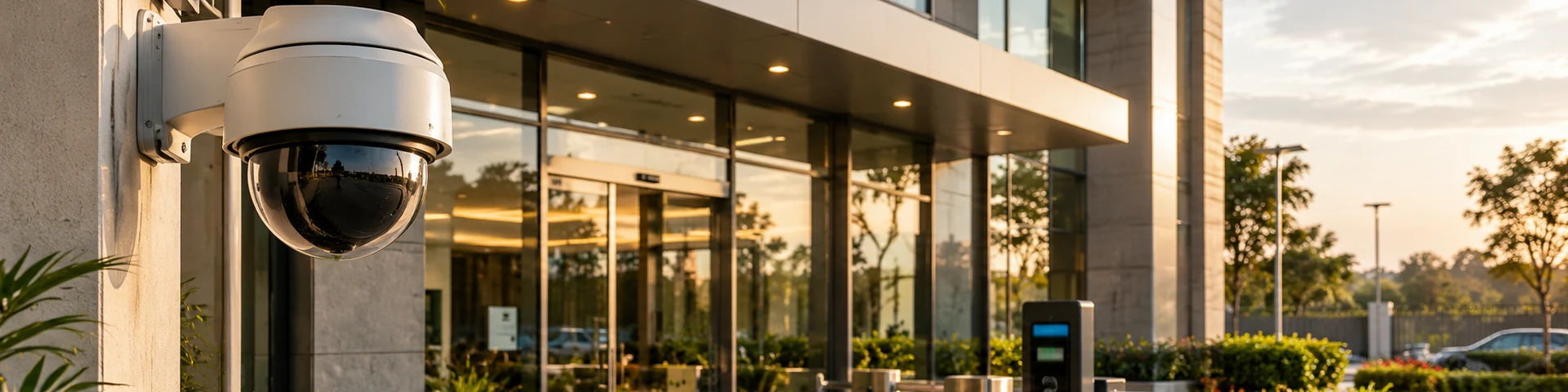
Protection without stopping the operation
An airport has to protect people and infrastructure while keeping passenger and operational flows moving. Those two requirements pull against each other: every additional check adds time, and every shortcut adds risk. Security design in an aviation environment is therefore about sequencing — where people and vehicles are checked, by whom, with what, and how quickly a queue can be recovered when something is found.
Logitech Consultants designs integrated airport security architectures covering terminal access, passenger and staff screening, baggage, vehicle movement and perimeter protection, brought together in a monitoring environment that gives security teams one view of the site.
What an airport security architecture covers
-
01
Terminal and staff access
Controlled entry for staff, contractors and visitors, with credentials and permissions mapped to restricted zones and reviewed as roles change.
-
02
Passenger and staff screening
Walk-through and handheld metal detection, people-screening and secondary inspection positions laid out around realistic throughput rather than ideal conditions.
-
03
Cabin and checked baggage
X-ray screening for cabin baggage and parcels, with checked-baggage handling and secondary inspection areas planned alongside the screening lane itself.
-
04
Vehicle and airside security
Vehicle identification, under-vehicle inspection, driver verification and barrier control at landside-to-airside transition points and service entrances.
-
05
Perimeter and landside protection
Electric fencing, intrusion detection, perimeter CCTV and security lighting coordinated so that detection, verification and response follow one another.
-
06
Command and monitoring
Camera, access, alarm and screening events presented to operators in a single monitoring environment, with video walls and recorded incident handling.
How an aviation security project is shaped
Checkpoint design before equipment selection
A screening lane is a workflow, not a machine. We map the path a passenger or member of staff takes, the space available, where bags are divested and reclaimed, how secondary inspection is handled and how a queue is diverted when a lane closes. Equipment is then selected against that workflow, and the site's operational team agrees the layout before anything is ordered.
- Throughput requirements agreed for peak and off-peak periods
- Lane layout, divestment and reclaim space confirmed on site
- Secondary screening and search areas positioned to avoid blocking flow
- Power, network and operator positions planned with the terminal team
Integration across landside and airside
Airport security fails at the seams. We connect access control, screening, vehicle inspection, CCTV and alarms so that a credential used at a staff gate, a vehicle at a service entrance and an alarm on the perimeter are all visible in the same operating picture, with records that can be reconstructed afterwards.
Working in a live terminal
Works are phased around flight schedules and restricted areas, with night and out-of-hours installation where the operation demands it. Commissioning includes realistic passenger-flow testing, operator training on the actual equipment, and acceptance checks witnessed by the client before handover.
Implementation and support
Aviation security equipment is only useful if it is available, operated correctly and maintained on a schedule.
- Phased installation coordinated with terminal operations, restricted-area access and flight schedules.
- Commissioning and acceptance testing against agreed throughput and detection requirements.
- Operator, supervisor and administrator training covering routine use, secondary inspection and incident escalation.
- Preventive maintenance with recorded verification of screening, recording and access functions after every service.
- Lifecycle planning for equipment with defined service life, including spares and phased replacement.
Questions we are asked
Can you work within an active terminal?
Yes. Works are planned around flight schedules and restricted-area procedures, typically in phases and often outside peak hours. Each phase is agreed with the airport's operations and security teams before mobilisation.
Do you supply screening equipment directly?
We bring together screening technologies as part of an integrated design, working with manufacturers and specialist partners. Specific equipment availability and capability are confirmed against your requirement during assessment rather than assumed from a catalogue.
How do you handle integration with existing airport systems?
We first establish what the existing access control, CCTV, screening and monitoring systems can expose. Integration is then scoped against what is genuinely supported, with interim manual procedures documented where a legacy system cannot be connected.
What about staff and contractor movement?
Staff access is usually the largest population an airport has to manage. We design credentialing and zone permissions so that joiners, leavers and role changes are handled systematically, with an audit trail of who held which access and when.
How is the system maintained after handover?
Under a maintenance agreement covering scheduled preventive service, fault response and verification testing, with records that support your own audit and regulatory obligations.
Related capabilities
Let’s build the right solution
Tell us what you are trying to achieve. We will help you assess the requirement, shape the architecture and identify the technology needed to deliver it.