
About Logitech Consultants
Technology partners & selection
The best solution is not the most expensive technology or the one with the longest feature list. It is the one that fits the requirement and can be supported for its working life.
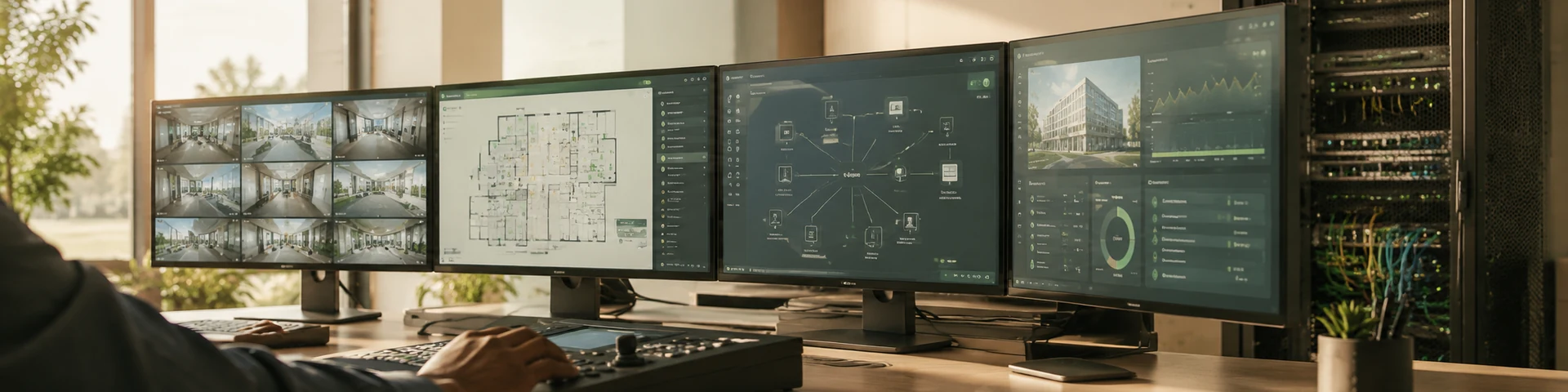
The right technology, chosen for a reason
No single manufacturer covers security, networking, servers, communications and business applications equally well. Logitech Consultants works with technology manufacturers, distributors and specialist partners to put together solutions that span those areas without pretending one product family can do everything.
Our role is to make the choice defensible. That means describing why a particular platform was selected, what it must integrate with, how it will be supported locally and what happens when it reaches end of life. Partner categories we draw on include security technology, screening and inspection, CCTV and surveillance, access control, networking, servers and storage, cybersecurity, communications, audio visual, and software and digital platforms.
What we evaluate before recommending a product
-
01
Performance
Whether the equipment meets the actual duty — throughput, resolution, capacity, coverage or load — with evidence rather than a datasheet headline.
-
02
Reliability
How the product behaves in real conditions: heat, dust, power instability, intermittent connectivity and continuous operation.
-
03
Compatibility and integration
Whether it will work with the systems already on site, and what the integration actually requires in licence, protocol or development effort.
-
04
Lifecycle cost
The cost of ownership across the working life, including licences, subscriptions, spares, power and the effort to maintain it.
-
05
Supportability and local availability
Whether spares, technical support and skilled technicians are reachable in Kenya, and how quickly a failed unit can be replaced.
-
06
Scalability
Whether the platform can grow by site, camera, user or transaction without a rebuild, and what the next step costs.
-
07
Operational fit
Whether the people who will use it daily can operate it within their workflow, training and staffing model.
How selection works in practice
The requirement comes before the brand
We begin with the operational problem, the site conditions and the outcome the client needs. Only then do we shortlist platforms. Where two products would both do the job, the deciding factors are usually support, integration effort and lifecycle cost rather than a marginal feature difference.
- Requirement and site survey documented before any product is proposed
- Shortlist with the reasons for inclusion and exclusion recorded
- Total cost of ownership compared, not just purchase price
- Client's existing standards and preferences considered first
What we expect from a supplier relationship
A product is only as good as the support behind it. We look for documented escalation routes, access to technical training, a clear warranty position and a credible product roadmap. On specialist equipment, availability and configuration are confirmed against the specific requirement rather than assumed from a catalogue.
Where the technology has to live
Selection does not end at the product. Power quality, network capacity, rack space, environmental conditions and the maintenance regime all affect whether a platform performs as intended. We check those conditions before installation, because the most common cause of a disappointing system is an environment that was never designed for it.
Implementation and support
Selection is only useful if what arrives on site matches what was designed.
- Design documentation that records the chosen platform, its interfaces and the assumptions behind the choice.
- Integration testing with the systems it must talk to, before commissioning at the client's expense.
- Configuration and commissioning against the agreed requirement, with results recorded.
- Handover covering administration, operation and the support route, not just a manual.
- Lifecycle planning for firmware, spares and end-of-life replacement so the estate does not drift out of support.
Questions we are asked
Which brands do you supply?
The portfolio draws on established manufacturers and specialist suppliers across security, ICT and digital platforms. Specific makes are proposed after the requirement is understood, and current partner status and product availability are confirmed for each proposal rather than implied by a logo wall.
Are you an authorised partner for a particular manufacturer?
Where an authorisation exists we will state it and document it. Where it does not, we will not claim it. If a project depends on a manufacturer's certification or warranty conditions, we confirm that position in writing before you commit.
Can we keep the brand we already use?
Usually, yes. Sticking with a platform your team already knows often reduces training and support risk. We will still assess whether it fits the requirement and whether the existing version is still supported by the manufacturer.
What happens when a product is discontinued?
We check the manufacturer's lifecycle position before recommending a platform and flag products approaching end of sale or end of support. Where replacement is likely during the system's life, we say so at design stage and plan a migration path.
Can you supply equipment without installing it?
Supply-only is considered where the client has the technical capability to install and commission correctly. In most cases we recommend delivering the system as designed, tested and commissioned, because that is where most integration problems are caught.
Related capabilities
Let’s build the right solution
Tell us what you are trying to achieve. We will help you assess the requirement, shape the architecture and identify the technology needed to deliver it.