
Security solutions
Smart site security
Separate systems in one operating environment — so a gate, a fence and a control room tell the same story.
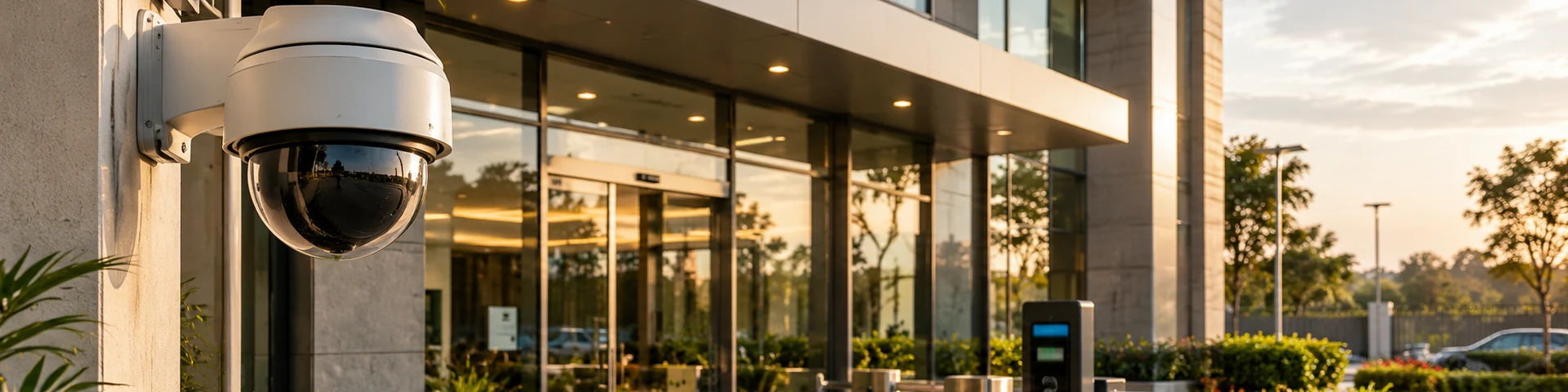
Security that works together
A modern secure facility rarely depends on one technology. It combines perimeter protection, vehicle control, pedestrian access, screening, surveillance and alarms. Each of those systems can be specified well on its own and still leave a site exposed, because the gaps usually sit between them: the barrier that opens without checking the plate, the alarm nobody can match to a camera, the visitor record that exists on paper but not in the access system.
Logitech Consultants plans these technologies as a single operating environment. That means working through how a vehicle actually arrives, who authorises it, what is verified before the barrier lifts, what evidence is retained and who responds when something is wrong. The technology is then selected to support that process, which is a different starting point from buying a set of products and hoping they cooperate.
The objective is practical: greater visibility, better control, faster response and stronger accountability across the whole site, rather than a collection of systems that happen to share a building.
The layers of an integrated site
-
01
Perimeter layer
Electric fencing and perimeter intrusion detection, backed by CCTV coverage of the fence line, gates and yards, so a detection produces both an alert and a view of what caused it.
-
02
Vehicle entry
ANPR and RFID identification, under-vehicle inspection where the risk requires it, driver verification, then barrier or bollard control — with the whole sequence written down as an operating procedure.
-
03
Pedestrian entry
Biometric or card identification feeding access control, metal detection at higher-risk entrances and turnstiles that enforce one person per authorised entry.
-
04
Surveillance and alarms
Camera coverage, intrusion detection and alarm points coordinated so that an event and its video arrive at the same place at the same time.
-
05
Command and control
CCTV, access, ANPR, intrusion, alarms, screening and visitor systems brought into a monitoring environment where operators see one picture rather than many disconnected ones.
-
06
Visitor and contractor management
Pre-registration, host approval, badge issue and movement records, so that people who are not permanent staff are still accounted for while they are on site.
-
07
Records and accountability
Retained access events, vehicle logs, alarm histories and video, searchable after the fact — because a security system also has to answer questions the next morning.
How an integrated site is planned
Start with the movement, not the equipment
We map the journeys a site actually handles — staff arriving at shift change, visitors reporting at reception, delivery vehicles at the service gate, contractors with tools and equipment. Each journey is broken into points where something is checked or decided. Only then do we decide which technology enforces that check and which technology records it.
- Entrances, junctions and zones documented with the decisions required at each
- Roles defined for guards, reception, control-room operators and management
- Escalation routes agreed for alarms, refused access and incidents
- Existing systems assessed for what can be reused and what has reached end of life
Design for failure, not just for normal operation
A gate that depends on one network link, one power feed or one server is a gate that will eventually stand open or stay shut at the wrong moment. We design power protection for controllers and barriers, consider what happens to access decisions when the network drops, and agree manual override procedures that guards can follow without improvising.
- Backup power for controllers, barriers, cameras and network equipment
- Local decision-making at the door where the design allows it
- Documented fail-safe and fail-secure behaviour for every controlled opening
- Tested manual procedures for the situations the technology cannot cover
Reduce the noise at the operations desk
Integration is only useful if it reduces work. A control room that receives every motion event from every camera is no better than one with no integration at all. We rationalise alarms, group them by zone and severity, link each to the relevant camera and access point, and give operators a short list of things that genuinely require a response.
Implementation and support
An integrated site is delivered in stages, because no operating facility can be taken offline to be rebuilt.
- Phased implementation by zone or by layer, with each stage left working and documented before the next begins.
- End-to-end commissioning that tests complete scenarios — a refused vehicle, an after-hours alarm, a visitor overstaying — not just individual devices.
- Training for guards, reception staff, control-room operators and administrators, each on the parts they actually use.
- Handover documentation covering as-built drawings, device schedules, credentials, operating procedures and escalation contacts.
- Maintenance and support covering all layers together, so a fault is diagnosed across systems rather than blamed on one of them.
Questions we are asked
Do we have to replace all our existing systems at once?
No. We start by assessing what is installed, what still has service life and which gaps actually matter. Most sites are better served by a phased plan that integrates existing cameras or access control where the interfaces allow it, and replaces the parts that are holding the rest back.
What happens when the network or power fails?
That is decided during design, not discovered during an incident. Controllers, barriers and recording equipment can be placed on protected power, access decisions can be handled locally where the equipment supports it, and every opening has an agreed fail-safe or fail-secure behaviour with a manual procedure behind it.
Who should staff the control room?
The people who are accountable for responding. Some sites run a permanent control room; others rely on a guardhouse with a viewing station, or on a central team covering several sites. The layout, screen count, alarm handling and training all follow from that decision, so we agree it before specifying the room.
Can a site be integrated without a control room?
Yes. Integration can be as simple as alarms appearing on the same platform as cameras, or access events being searchable alongside video. Command and control adds value where there is someone to act on it; without that, a well-organised monitoring station and clear procedures are often the better investment.
How do we know the system is working after handover?
Through routine verification: recorded camera checks, alarm tests, access-event audits and review of how often each layer produced a genuine response. Under a maintenance agreement these checks are scheduled, and the results give management something more useful than an assurance that the equipment is powered on.
Related capabilities
Let’s build the right solution
Tell us what you are trying to achieve. We will help you assess the requirement, shape the architecture and identify the technology needed to deliver it.