
Security solutions
Security command & control
One operational picture, built from the systems you already run — so an event reaches the person who can act on it.
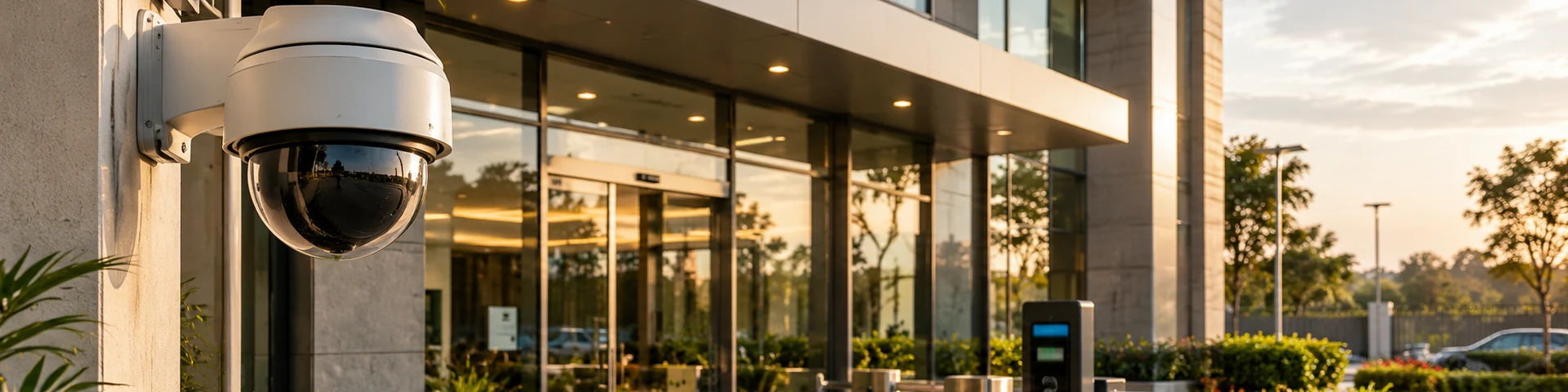
From multiple systems to one operating picture
As security environments become more connected, the difficulty shifts from collecting events to understanding them. A camera detects movement, a door reports a forced open, a barrier logs a vehicle, an alarm panel trips — each is useful on its own, but an operator watching four separate screens under pressure will miss the relationship between them.
Logitech Consultants integrates security technologies into a centralised monitoring and command environment where appropriate. The aim is not to replace the systems a site already depends on, but to present the events that matter in one place, with the video, location and record an operator needs to decide what to do next.
Systems brought into the operating picture
-
01
CCTV and video management
Live and recorded video surfaced alongside the event that triggered it, so operators see the incident rather than searching for the camera.
-
02
Access control and identity
Door status, access granted and access denied events, with the person and zone behind each record available at the point of response.
-
03
ANPR, barriers and vehicle control
Vehicle reads, barrier activity and driver verification joined into a single vehicle record from approach to exit.
-
04
Intrusion, alarms and environmental sensors
Perimeter intrusion, alarm panels and environmental sensors presented as graded events, not as an undifferentiated stream of alerts.
-
05
Screening and visitor management
Screening lane events and visitor records linked to the checkpoint they belong to, supporting both response and later audit.
-
06
Communications and operator workflow
Radio, telephony and intercom integrated where supported, so the operator can dispatch a response without leaving the console.
How command and control is delivered
Integration assessment before design
Most sites have a mixture of systems from different manufacturers and generations. We inventory what exists, establish what each system can expose — events, video streams, APIs, dry contacts — and design around supported capability. Where a system can only provide limited signals, that limitation is documented rather than papered over.
- Existing systems, versions and integration options recorded
- Event priorities and response expectations agreed with the security team
- Network and server capacity assessed for video and event traffic
- Operator roles defined before screens and permissions are designed
Alarm handling and response workflow
A command environment is only as good as the procedure behind it. We agree what constitutes an alarm, who receives it, what evidence appears with it and what the operator is expected to do. Screens, priorities and escalation paths are then built to match that procedure, and tested with simulated events before go-live.
Control room, video wall and resilience
Workstation layouts, video walls and viewing distances are designed around how long an operator actually spends watching. Recording and event data are protected so that an incident can be reconstructed afterwards, and the environment is designed to remain useful during a network or power interruption rather than failing completely.
Implementation and support
An integrated control environment has to be commissioned against real scenarios and supported after handover.
- Staged integration, connecting one system at a time so that existing security coverage is not interrupted.
- Scenario testing with the client's security team, covering detection, verification, escalation and record retrieval.
- Operator and supervisor training on alarm handling, camera call-up, incident logging and evidence export.
- Documentation of integrated systems, event mapping and the procedures the configuration assumes.
- Ongoing support covering configuration changes, firmware compatibility and additions as systems are replaced.
Questions we are asked
Do we have to replace our existing systems?
Usually not. The point of integration is to get more from what you already operate. We assess what each system can expose and build around that. Replacement is recommended only where a system cannot provide the events or video needed, or where support has ended.
Which systems can be integrated?
Typically CCTV, access control, ANPR and barriers, intrusion detection, alarms, screening systems, visitor management and environmental sensors. The realistic answer depends on the specific makes and versions on your site, which is why the assessment comes first.
Will operators need to learn several interfaces?
The aim is to reduce the number of interfaces an operator works across, not add one. Where a system cannot be fully integrated, we keep the fallback procedure explicit and train operators on when they need to switch to it.
How long does integration take?
It depends on the number of systems, their integration capability and the response workflow to be configured. We phase the work so that useful integration is delivered early and additional systems are added without disrupting live monitoring.
Can the control room cover multiple sites?
Yes, where connectivity and bandwidth allow. Multi-site monitoring is designed so that each site retains local recording and can operate independently if the link to the control room fails.
Related capabilities
Let’s build the right solution
Tell us what you are trying to achieve. We will help you assess the requirement, shape the architecture and identify the technology needed to deliver it.